Convert Browsers to Buyers.
AI fitting removes imagination gaps and helps buyers visualize themselves before purchasing.
Before
After AI Try-On
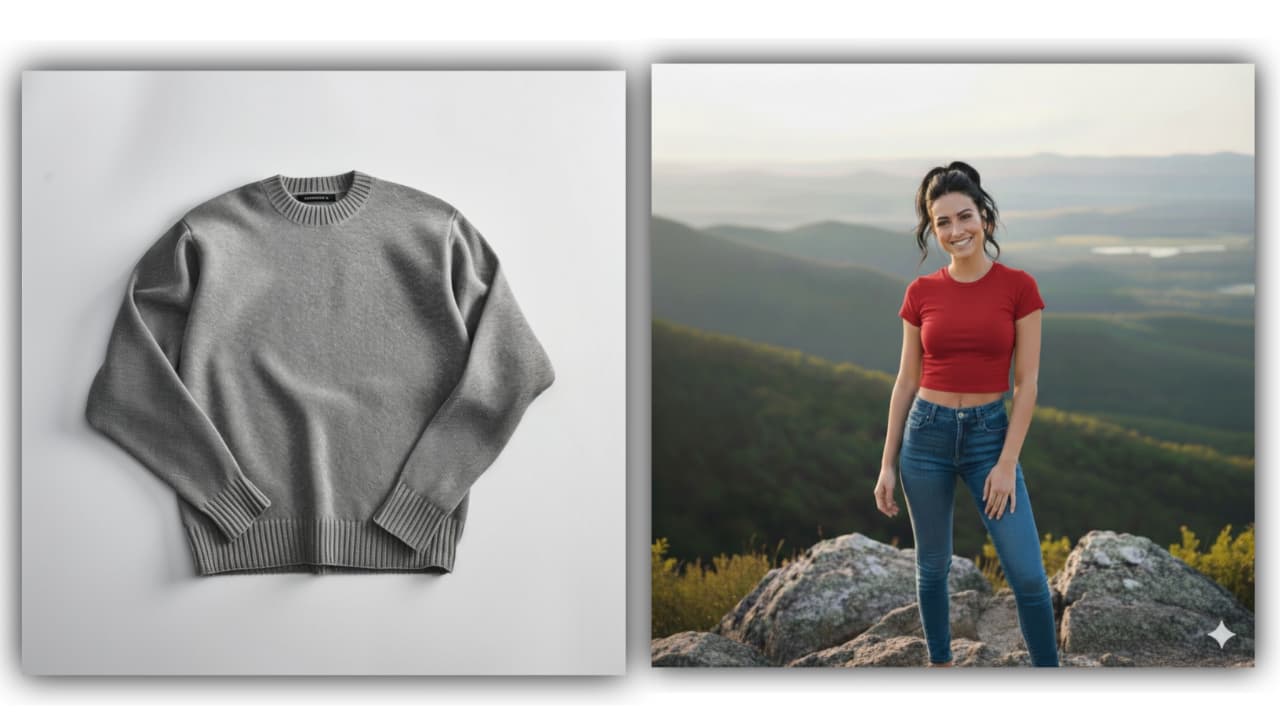

Industry research suggests nearly 30% of fashion e-commerce returns are driven by fitting uncertainty and low purchase confidence.
Customers often return products not because of quality, but because they could not confidently visualize how the outfit would look on them personally.
Virtual try-on technology has shown the potential to reduce fitting-related returns by up to 40%.
From early workflow experiments to a working AI-powered storefront integration system for fashion brands.
Early workflow experiments focused on popup guidance systems, AI fitting flows, product-page logic, and storefront integration structure.
Improved AI storefront workflow featuring automatic garment detection, responsive mobile/desktop integration, non-redirect user flow, theme-adaptive fitting buttons, and 5 daily trials per user for infrastructure protection.
Early workflow experiments focused on AI fitting guidance, storefront integration logic, and product-page workflow structure.
Improved workflow with automatic garment detection, responsive storefront fitting integration, non-redirect generation flow, theme-adaptive buttons, and 5 daily trials per user.
Integrated on real D2C storefront workflows during MVP testing
AI fitting removes imagination gaps and helps buyers visualize themselves before purchasing.
Buyers return fashion products because the delivered reality often fails to match the imagined version in their mind. AI fitting reduces that uncertainty by helping customers visualize themselves before purchasing. Higher visualization confidence leads to stronger purchase intent, lower hesitation, and fewer fitting-related returns.
Customer photos are processed through encrypted workflows and removed immediately after generation.
Infrastructure designed for stable AI processing, secure workflow handling, and premium storefront performance.
Enterprise Grade AI Solutions For Digital Retail